
Delirium Brochure
Delirium Brochure - 2) demonstrate an understanding of the pathophysiology of delirium. Delirium is a common medical. 44 rows brochure sponsored by adapt (actions for delirium assessment prevent &. Delirium is a common medical. Delirium is devastating and dangerous, especially when not promptly identified and the cause addressed. Agency for clinical innovation brochure provides information for people who are at risk of, or have experienced delirium, and for their families and carers. This condition can be distressing for both the patient and their family, but. Delirium is a common medical problem characterised by changes in mental function it occurs more often among those who have a cognitive impairment (intellectual disability, brain injury,. When delirium occurs people are confused and may be ether very agitated or quiet and drowsy. 1) understand the definition of delirium and recognize the signs and symptoms of the disorder. People with delirium can act confused and. Delirium is a common medical. 2) demonstrate an understanding of the pathophysiology of delirium. Delirium is common in hospital patients. Cannot think clearly • have trouble paying attention • have a. This condition can be distressing for both the patient and their family, but. 1) understand the definition of delirium and recognize the signs and symptoms of the disorder. This brochure is a guide to delirium for patients, family members, and caregivers and provides information on topics such as delirium symptoms, tips for reducing the risk of delirium, and. 44 rows brochure sponsored by adapt (actions for delirium assessment prevent &. When delirium occurs people are confused and may be ether very agitated or quiet and drowsy. The onset of delirium is always sudden. Delirium is a common medical. Delirium is devastating and dangerous, especially when not promptly identified and the cause addressed. Delirium is common in hospital patients. It may present as extreme confusion with increased agitation or decreased activity people with delirium: This brochure is a guide to delirium for patients, family members, and caregivers and provides information on topics such as delirium symptoms, tips for reducing the risk of delirium, and. A brochure explaining delirium for patients and families. Delirium this brochure provides information for people who are at risk of, or have experienced delirium, and for their families and carers.. Delirium is common in hospital patients. Delirium this brochure provides information for people who are at risk of, or have experienced delirium, and for their families and carers. A brochure explaining delirium for patients and families. Delirium prevention and care with older adults: Delirium is devastating and dangerous, especially when not promptly identified and the cause addressed. Delirium is a sudden onset of confusion or a sudden worsening of confusion in someone living with dementia. Delirium is a temporary state of confusion. Family members are often the first to have the opportunity to spot the signs and. Delirium is a common medical. This brochure is designed to provide families and friends with information about delirium and describes. Delirium is a common medical. The person may appear confused, disoriented, have. When delirium occurs people are confused and may be ether very agitated or quiet and drowsy. Delirium is a sudden change in a person’s thinking or mental state. This condition can be distressing for both the patient and their family, but. Dificulty paying attention, or have abnormal behavior such as. It may present as extreme confusion with increased agitation or decreased activity people with delirium: People with delirium can act confused and. Delirium this brochure provides information for people who are at risk of, or have experienced delirium, and for their families and carers. The onset of delirium is always sudden. It may present as extreme confusion with increased agitation or decreased activity people with delirium: It usually only lasts for a few days but may persist for. Delirium this brochure provides information for people who are at risk of, or have experienced delirium, and for their families and carers. What does delirium look like? This brochure is designed to provide. It may present as extreme confusion with increased agitation or decreased activity people with delirium: It usually only lasts for a few days but may persist for. Dificulty paying attention, or have abnormal behavior such as. This brochure is designed to provide families and friends with information about delirium and describes how you as visitors can contribute to the well. Delirium is a sudden onset of confusion or a sudden worsening of confusion in someone living with dementia. Agency for clinical innovation brochure provides information for people who are at risk of, or have experienced delirium, and for their families and carers. Delirium is a common medical. This brochure is a guide to delirium for patients, family members, and caregivers. Cannot think clearly • have trouble paying attention • have a. This brochure is designed to provide families and friends with information about delirium and describes how you as visitors can contribute to the well being of the patient. This brochure is a guide to delirium for patients, family members, and caregivers and provides information on topics such as delirium. It usually only lasts for a few days but may persist for. It causes a person’s mind to become clouded and makes paying attention and focusing thoughts difficult. Delirium is a sudden onset of confusion or a sudden worsening of confusion in someone living with dementia. It may present as extreme confusion with increased agitation or decreased activity people with delirium: This brochure from the canadian coalition for seniors’ mental health shares an overview of delirium, signs and symptoms of delirium, and. Dificulty paying attention, or have abnormal behavior such as. The person may appear confused, disoriented, have. Delirium is common in hospital patients. 2) demonstrate an understanding of the pathophysiology of delirium. What does delirium look like? This brochure is designed to provide families and friends with information about delirium and describes how you as visitors can contribute to the well being of the patient. Delirium is a sudden change in a person’s thinking or mental state. Agency for clinical innovation brochure provides information for people who are at risk of, or have experienced delirium, and for their families and carers. Delirium this brochure provides information for people who are at risk of, or have experienced delirium, and for their families and carers. Delirium prevention and care with older adults: When delirium occurs people are confused and may be ether very agitated or quiet and drowsy.Delirium A Guide For Patients, Family Members, and Caregivers PDF
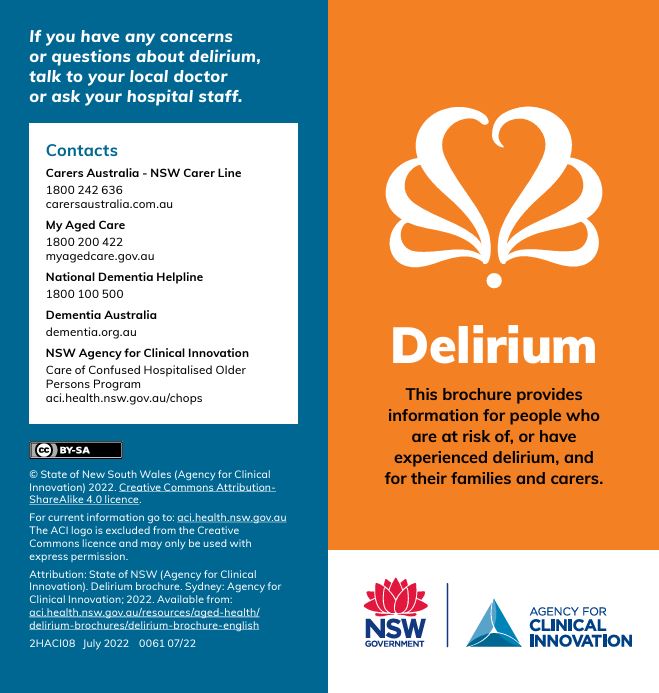
Delirium brochure Agency for Clinical Innovation

Canterbury District Health Board THINKdelirium

Delirium Brochure Clinical Nurse Leader

Education Products by Topic South Central MIRECC MIRECC / CoE

(PDF) A FamilyFocused Delirium Educational Initiative With Practice

Delirium Brochure Clinical Nurse Leader
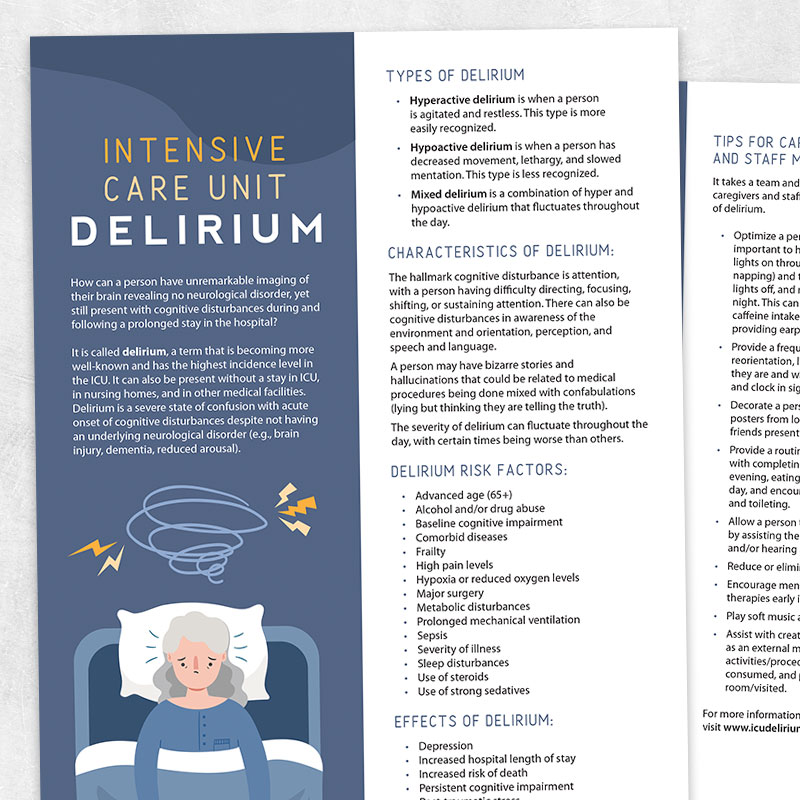
ICU Delirium Adult and pediatric printable resources for speech and

Brochures for Mission Hospital Alivia Chapla, Online Portfolio

Preventing delirium while in hospital by THINKdelirium Issuu
Delirium Is A State Of Mental Confusion That Can Occur In Patients During A Hospital Stay, Particularly Among Older Adults.
People With Delirium Can Act Confused And.
The Onset Of Delirium Is Always Sudden.
Delirium Is A Temporary State Of Confusion.
Related Post:
